Buy grosspudel.eu ?
We are moving the project
grosspudel.eu .
Are you interested in purchasing the domain
grosspudel.eu ?
domain@kv-gmbh.de · 0541-91531010
Buy grosspudel.eu ?
What is a honing tool?
A honing tool is a precision tool used to improve the surface finish and accuracy of a workpiece. It is typically used in metalworking to create a smooth and precise surface on a part. Honing tools can be used to remove small imperfections, burrs, and irregularities left behind by other machining processes, resulting in a higher quality finished product. **
What happens during honing?
During honing, a honing stone with abrasive particles is passed back and forth over the surface of a workpiece. This process helps to remove any imperfections or irregularities on the surface, resulting in a smoother and more precise finish. Honing also helps to improve the geometry and accuracy of the workpiece, making it suitable for further finishing processes or assembly. **

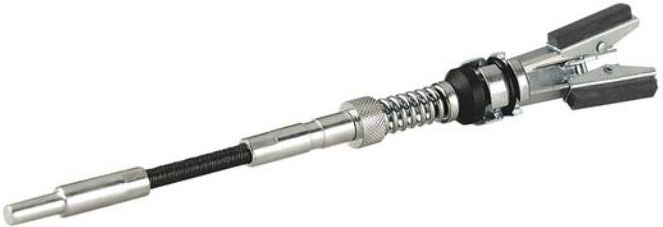
Similar search terms for SEALEY-VS029-Honing-Tool
Top-Angebote
Products related to SEALEY-VS029-Honing-Tool:
-
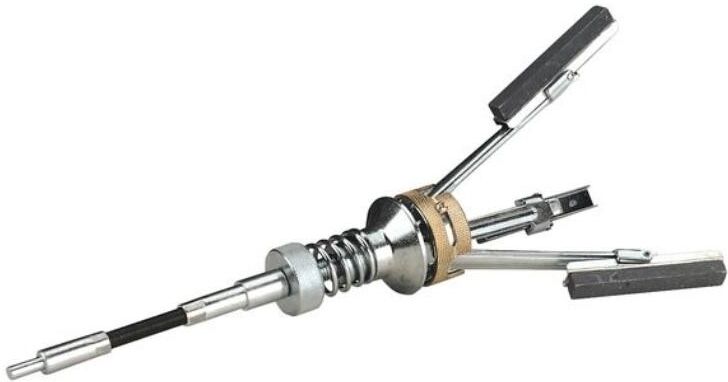
SEALEY VS162 Honing ToolNumber of arms: 3; Diameter from [mm]: 50; Diameter up to [mm]: 175; Length [mm]: 75; Diameter 1 [mm]: 50-100; Diameter 2 [mm]: 100-175; article number of recommended accessories: VS1621, VS1622, VS1623; Supplementary Info: Medium Stones46,49 £*Shipping: 8,45 £Secure redirect to the provider


-
Is the cylinder bore honing still present?
Without physically inspecting the cylinder bore honing, it is difficult to determine if it is still present. However, if the engine has not been rebuilt or machined since the honing was done, it is likely that the cylinder bore honing is still present. Over time and with use, the honing marks may become less pronounced, but they should still be visible to some extent. If there are concerns about the condition of the cylinder bore honing, it is best to have a professional mechanic inspect it. **
-
What is the difference between lapping and honing?
Lapping and honing are both abrasive machining processes used to improve the surface finish of a workpiece, but they differ in their techniques and objectives. Lapping involves rubbing two surfaces together with an abrasive slurry to achieve a high degree of flatness and surface finish. Honing, on the other hand, uses a set of abrasive stones that are pressed against the workpiece with controlled pressure and oscillating motion to create a precise and uniform surface finish. In summary, lapping is more focused on achieving flatness, while honing is geared towards achieving precise dimensions and surface finish. **
-
What is the difference between honing and reaming?
Honing is a finishing process that involves the use of abrasive stones to improve the surface finish and geometry of a hole, while reaming is a cutting process that enlarges and improves the accuracy of a hole using a multi-fluted cutting tool. Honing is typically used to achieve a precise surface finish and size tolerance, while reaming is primarily used to achieve a specific size and geometry of a hole. Additionally, honing is often done after drilling or boring operations, while reaming is typically done before honing to achieve the desired size and finish. **
-
What is the difference between honing and sharpening a blade?
Honing a blade involves realigning the edge of the blade to restore its sharpness, while sharpening a blade involves removing material from the blade to create a new edge. Honing is typically done more frequently to maintain the blade's sharpness, while sharpening is done less frequently to restore a dull blade. Honing is often done with a honing steel or ceramic rod, while sharpening is done with a sharpening stone or electric sharpener. **


Which tool?
The tool that is most suitable for the task depends on the specific requirements and goals of the project. It is important to consider factors such as the complexity of the project, the skill level of the team members, and the budget available. Some popular project management tools include Trello, Asana, and Microsoft Project, each offering different features and functionalities to support project planning, execution, and monitoring. Ultimately, the best tool is the one that aligns most closely with the needs and preferences of the project team. **
What is the training regulation for tool mechanics?
The training regulation for tool mechanics typically includes a combination of classroom instruction and hands-on training. This training covers topics such as blueprint reading, precision measurement, machine tool operation, and tool maintenance. Apprenticeships are often a common pathway for individuals to become tool mechanics, allowing them to gain practical experience under the guidance of experienced professionals. Upon completion of the training program, individuals may need to pass a certification exam to become a certified tool mechanic. **
Top-Angebote
Products related to SEALEY-VS029-Honing-Tool:
-
SEALEY VS162 Honing ToolNumber of arms: 3; Diameter from [mm]: 50; Diameter up to [mm]: 175; Length [mm]: 75; Diameter 1 [mm]: 50-100; Diameter 2 [mm]: 100-175; article number of recommended accessories: VS1621, VS1622, VS1623; Supplementary Info: Medium Stones46,49 £*Shipping: 8,45 £Secure redirect to the provider
-
What is a honing tool?
A honing tool is a precision tool used to improve the surface finish and accuracy of a workpiece. It is typically used in metalworking to create a smooth and precise surface on a part. Honing tools can be used to remove small imperfections, burrs, and irregularities left behind by other machining processes, resulting in a higher quality finished product. **
-
What happens during honing?
During honing, a honing stone with abrasive particles is passed back and forth over the surface of a workpiece. This process helps to remove any imperfections or irregularities on the surface, resulting in a smoother and more precise finish. Honing also helps to improve the geometry and accuracy of the workpiece, making it suitable for further finishing processes or assembly. **
-
Is the cylinder bore honing still present?
Without physically inspecting the cylinder bore honing, it is difficult to determine if it is still present. However, if the engine has not been rebuilt or machined since the honing was done, it is likely that the cylinder bore honing is still present. Over time and with use, the honing marks may become less pronounced, but they should still be visible to some extent. If there are concerns about the condition of the cylinder bore honing, it is best to have a professional mechanic inspect it. **
-
What is the difference between lapping and honing?
Lapping and honing are both abrasive machining processes used to improve the surface finish of a workpiece, but they differ in their techniques and objectives. Lapping involves rubbing two surfaces together with an abrasive slurry to achieve a high degree of flatness and surface finish. Honing, on the other hand, uses a set of abrasive stones that are pressed against the workpiece with controlled pressure and oscillating motion to create a precise and uniform surface finish. In summary, lapping is more focused on achieving flatness, while honing is geared towards achieving precise dimensions and surface finish. **
Similar search terms for SEALEY-VS029-Honing-Tool
-
What is the difference between honing and reaming?
Honing is a finishing process that involves the use of abrasive stones to improve the surface finish and geometry of a hole, while reaming is a cutting process that enlarges and improves the accuracy of a hole using a multi-fluted cutting tool. Honing is typically used to achieve a precise surface finish and size tolerance, while reaming is primarily used to achieve a specific size and geometry of a hole. Additionally, honing is often done after drilling or boring operations, while reaming is typically done before honing to achieve the desired size and finish. **
-
What is the difference between honing and sharpening a blade?
Honing a blade involves realigning the edge of the blade to restore its sharpness, while sharpening a blade involves removing material from the blade to create a new edge. Honing is typically done more frequently to maintain the blade's sharpness, while sharpening is done less frequently to restore a dull blade. Honing is often done with a honing steel or ceramic rod, while sharpening is done with a sharpening stone or electric sharpener. **
-
Which tool?
The tool that is most suitable for the task depends on the specific requirements and goals of the project. It is important to consider factors such as the complexity of the project, the skill level of the team members, and the budget available. Some popular project management tools include Trello, Asana, and Microsoft Project, each offering different features and functionalities to support project planning, execution, and monitoring. Ultimately, the best tool is the one that aligns most closely with the needs and preferences of the project team. **
-
What is the training regulation for tool mechanics?
The training regulation for tool mechanics typically includes a combination of classroom instruction and hands-on training. This training covers topics such as blueprint reading, precision measurement, machine tool operation, and tool maintenance. Apprenticeships are often a common pathway for individuals to become tool mechanics, allowing them to gain practical experience under the guidance of experienced professionals. Upon completion of the training program, individuals may need to pass a certification exam to become a certified tool mechanic. **
* All prices are inclusive of VAT and, if applicable, plus shipping costs. The offer information is based on the details provided by the respective shop and is updated through automated processes. Real-time updates do not occur, so deviations can occur in individual cases. ** Note: Parts of this content were created by AI.