Buy grosspudel.eu ?
We are moving the project
grosspudel.eu .
Are you interested in purchasing the domain
grosspudel.eu ?
domain@kv-gmbh.de · 0541-91531010
Buy grosspudel.eu ?
What does 'leur' and 'lui' mean?
In French, 'leur' is a pronoun that means 'their' or 'them' when referring to a group of people or things. It is used to indicate possession or indirect object. On the other hand, 'lui' is a pronoun that means 'him' or 'her' when referring to a singular person. It is used to indicate possession or as an indirect object. **
How is "eux" or "leur" used in French?
"Eux" and "leur" are both pronouns used in French to refer to people or things. "Eux" is used as a direct object pronoun to replace a group of people or things, while "leur" is used as an indirect object pronoun to replace a group of people. For example, "Je les ai vus" (I saw them) uses "les" as a direct object pronoun, while "Je leur ai parlé" (I spoke to them) uses "leur" as an indirect object pronoun. **


Similar search terms for Leur
Top-Angebote
Products related to Leur:
-
Multicon Wholesale Hub Aerobic Stepper, Adjustable Training Exercise Platform, Workout Step For Fitness, Pink Home Exercise Equipment Aerobic Stepper, Adjustable Training Exercise Platform, Workout Step For Fitness, Pink Home Exercise EquipmentElevate your fitness routine with the adjustable aerobic stepper, a musthave addition to your workout gear! Whether you're looking to lose weight, build muscle, or improve cardiovascular fitness, this stepper is your ideal workout companion. Perfect...124,97 $*Shipping: 0,00 $Secure redirect to the provider
-
Market Central Adjustable Swim Cuffs For Water Aerobics Floating Exercise Training Adjustable Swim Cuffs For Water Aerobics Floating Exercise TrainingTurn every pool session into a comfortable and effective workout with these adjustable swim cuffs designed for waterbased fitness routines. These lightweight foam cuffs provide gentle buoyancy support for your arms or ankles, making them ideal for...41,97 $*Shipping: 0,00 $Secure redirect to the provider
-
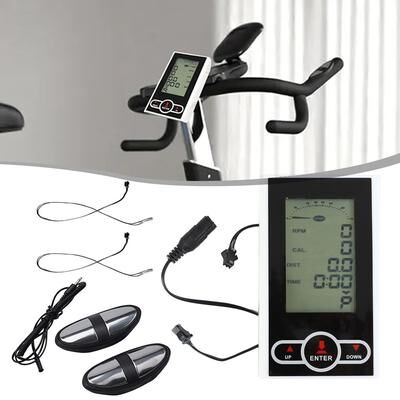
Market Central Exercise Bike Monitor Speedometer Display For Stationary Bike Training Exercise Bike Monitor Speedometer Display For Stationary Bike TrainingStay motivated and track every ride with a clear, easytoread display designed to enhance your indoor cycling experience. This exercise bike monitor helps you keep an eye on essential workout data while training at home, in the gym, or during daily...54,97 $*Shipping: 0,00 $Secure redirect to the provider
-
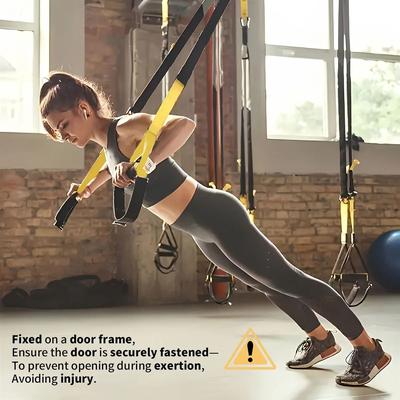
Uplift Essentials Suspended Training Belt With Bungee Resistance For Home Exercise Suspended Training Belt With Bungee Resistance For Home ExerciseBuild strength, flexibility, and balance with the Suspended Training Belt With Bungee Resistance For Home Exercise a versatile fullbody workout system perfect for pullups, pilates, resistance training, and home fitness. Key Features Durable Bungee...34,97 $*Shipping: 0,00 $Secure redirect to the provider


-
How are the object pronouns lui and leur used?
The object pronouns lui and leur are used to replace indirect objects in French. Lui is used to replace singular indirect objects, while leur is used to replace plural indirect objects. These pronouns come before the verb in a sentence and agree in gender and number with the noun they are replacing. For example, "Je lui parle" means "I am talking to him/her" and "Je leur donne des cadeaux" means "I am giving them gifts." **
-
What is the difference between ses, leur and leurs?
Ses, leur, and leurs are all possessive adjectives in French, but they are used in different contexts. "Ses" is used to indicate possession by a singular third person, "leur" is used for a singular third person, and "leurs" is used for plural third person. For example, "ses chaussures" means "his/her shoes," "leur maison" means "their house," and "leurs voitures" means "their cars." It's important to pay attention to the number and gender of the noun being possessed in order to choose the correct possessive adjective. **
-
'I don't understand the use of lui and leur?'
In French, "lui" and "leur" are both used as indirect object pronouns to replace nouns that are the recipients of the action. "Lui" is used to refer to a singular masculine or feminine noun, while "leur" is used to refer to a plural noun. For example, "Je lui ai donné le livre" means "I gave him/her the book," and "Je leur ai donné les livres" means "I gave them the books." It's important to remember that these pronouns must agree in gender and number with the noun they are replacing. **
-
When do I use leur and leurs in French?
You use "leur" when you want to indicate possession or belonging for a singular noun, and "leurs" when you want to indicate possession or belonging for plural nouns. For example, "leur maison" means "their house" (singular), and "leurs voitures" means "their cars" (plural). **

What is the difference between leur and leurs in French?
In French, "leur" is used as a singular possessive pronoun meaning "their" when referring to one person or thing. On the other hand, "leurs" is the plural form of "leur" and is used when referring to multiple people or things. So, the main difference between "leur" and "leurs" is that "leur" is singular and "leurs" is plural. **
How can one recognize when to use "leur" or "eux"?
One can recognize when to use "leur" or "eux" by understanding their different functions in a sentence. "Leur" is a pronoun used to indicate possession or indirect object, while "eux" is a pronoun used as a subject or direct object. Therefore, if the pronoun is referring to possession or an indirect object, "leur" should be used. If the pronoun is referring to a subject or direct object, "eux" should be used. **
Top-Angebote
Products related to Leur:
-
Uplifted Finds Pro Clean Pet Ear Grooming & Health Powder Pro Clean Pet Ear Grooming & Health PowderEnsure your pets ears stay healthy and odorfree with the ProClean Pet Ear Grooming Powder. This essential healthcare tool is designed for both dogs and cats, serving as a dualpurpose solution for hygiene and grooming comfort. For breeds that grow...62,97 $*Shipping: 0,00 $Secure redirect to the provider
-
PetsAreLife Handheld Vacuum For Pet Hair Removal And Deep Grooming: Ultimate Cleaning Companion For Pet Owners Handheld Vacuum For Pet Hair Removal And Deep Grooming: Ultimate Cleaning Companion For Pet OwnersLooking for a grooming solution that combines the best of both worlds Look no further than our Portable Handheld Vacuum for Pet Hair! With its stateoftheart features and cuttingedge technology, our pet hair vacuum is the perfect tool for pet owners...29,97 $*Shipping: 0,00 $Secure redirect to the provider
-
Multicon Wholesale Hub Aerobic Stepper, Adjustable Training Exercise Platform, Workout Step For Fitness, Pink Home Exercise Equipment Aerobic Stepper, Adjustable Training Exercise Platform, Workout Step For Fitness, Pink Home Exercise EquipmentElevate your fitness routine with the adjustable aerobic stepper, a musthave addition to your workout gear! Whether you're looking to lose weight, build muscle, or improve cardiovascular fitness, this stepper is your ideal workout companion. Perfect...124,97 $*Shipping: 0,00 $Secure redirect to the provider
-
Market Central Adjustable Swim Cuffs For Water Aerobics Floating Exercise Training Adjustable Swim Cuffs For Water Aerobics Floating Exercise TrainingTurn every pool session into a comfortable and effective workout with these adjustable swim cuffs designed for waterbased fitness routines. These lightweight foam cuffs provide gentle buoyancy support for your arms or ankles, making them ideal for...41,97 $*Shipping: 0,00 $Secure redirect to the provider
-
What does 'leur' and 'lui' mean?
In French, 'leur' is a pronoun that means 'their' or 'them' when referring to a group of people or things. It is used to indicate possession or indirect object. On the other hand, 'lui' is a pronoun that means 'him' or 'her' when referring to a singular person. It is used to indicate possession or as an indirect object. **
-
How is "eux" or "leur" used in French?
"Eux" and "leur" are both pronouns used in French to refer to people or things. "Eux" is used as a direct object pronoun to replace a group of people or things, while "leur" is used as an indirect object pronoun to replace a group of people. For example, "Je les ai vus" (I saw them) uses "les" as a direct object pronoun, while "Je leur ai parlé" (I spoke to them) uses "leur" as an indirect object pronoun. **
-
How are the object pronouns lui and leur used?
The object pronouns lui and leur are used to replace indirect objects in French. Lui is used to replace singular indirect objects, while leur is used to replace plural indirect objects. These pronouns come before the verb in a sentence and agree in gender and number with the noun they are replacing. For example, "Je lui parle" means "I am talking to him/her" and "Je leur donne des cadeaux" means "I am giving them gifts." **
-
What is the difference between ses, leur and leurs?
Ses, leur, and leurs are all possessive adjectives in French, but they are used in different contexts. "Ses" is used to indicate possession by a singular third person, "leur" is used for a singular third person, and "leurs" is used for plural third person. For example, "ses chaussures" means "his/her shoes," "leur maison" means "their house," and "leurs voitures" means "their cars." It's important to pay attention to the number and gender of the noun being possessed in order to choose the correct possessive adjective. **
Similar search terms for Leur
-
Market Central Exercise Bike Monitor Speedometer Display For Stationary Bike Training Exercise Bike Monitor Speedometer Display For Stationary Bike TrainingStay motivated and track every ride with a clear, easytoread display designed to enhance your indoor cycling experience. This exercise bike monitor helps you keep an eye on essential workout data while training at home, in the gym, or during daily...54,97 $*Shipping: 0,00 $Secure redirect to the provider
-
Uplift Essentials Suspended Training Belt With Bungee Resistance For Home Exercise Suspended Training Belt With Bungee Resistance For Home ExerciseBuild strength, flexibility, and balance with the Suspended Training Belt With Bungee Resistance For Home Exercise a versatile fullbody workout system perfect for pullups, pilates, resistance training, and home fitness. Key Features Durable Bungee...34,97 $*Shipping: 0,00 $Secure redirect to the provider
-
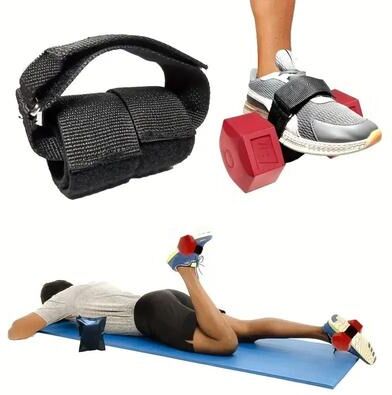
Uplift Picks Adjustable Shin And Calf Training Strap For Weighted Exercise Adjustable Shin And Calf Training Strap For Weighted ExerciseBuild a more balanced lowerbody routine with focused resistance training. This shin training strap is designed to hold compatible weights while you perform controlled foot and ankle movements. It helps target the muscles around the shin and calf,...63,48 $*Shipping: 0,00 $Secure redirect to the provider
-
SHORT BOOKS LTD Fast Exercise – The Science of High-Intensity Training for Better Health by Dr Michael Mosley Fitness, Weight Loss & Longevity BookGet fitter, healthier, and stronger—in less time. In Fast Exercise, bestselling health expert Dr Michael Mosley explores the science behind high-intensity interval training (HIIT) and explains how short, efficient workouts can deliver powerful health benefits. Backed by cutting-edge research, this book shows how brief bursts of intense activity can improve fitness, weight loss, blood sugar control, heart health, and longevity. Dr Mosley breaks down complex science into practical, easy-to-follow advice, making this book ideal for people who are short on time but serious about their health. Whether you’re new to exercise or looking to optimize your routine, Fast Exercise provides realistic, evidence-based strategies that fit into everyday life. What You’ll Learn: How HIIT boosts fitness in minutes a week The link between exercise, metabolism, and longevity Simple fast-exercise routines you can do anywhere How to improve insulin sensitivity and heart health Science-backed tips from a trusted medical expert Perfect for fans of The Fast Diet and The 5:2 Method, Fast Exercise is an essential guide to modern fitness and long-term wellbeing.1,50 £*Shipping: 1,99 £Secure redirect to the provider
-
'I don't understand the use of lui and leur?'
In French, "lui" and "leur" are both used as indirect object pronouns to replace nouns that are the recipients of the action. "Lui" is used to refer to a singular masculine or feminine noun, while "leur" is used to refer to a plural noun. For example, "Je lui ai donné le livre" means "I gave him/her the book," and "Je leur ai donné les livres" means "I gave them the books." It's important to remember that these pronouns must agree in gender and number with the noun they are replacing. **
-
When do I use leur and leurs in French?
You use "leur" when you want to indicate possession or belonging for a singular noun, and "leurs" when you want to indicate possession or belonging for plural nouns. For example, "leur maison" means "their house" (singular), and "leurs voitures" means "their cars" (plural). **
-
What is the difference between leur and leurs in French?
In French, "leur" is used as a singular possessive pronoun meaning "their" when referring to one person or thing. On the other hand, "leurs" is the plural form of "leur" and is used when referring to multiple people or things. So, the main difference between "leur" and "leurs" is that "leur" is singular and "leurs" is plural. **
-
How can one recognize when to use "leur" or "eux"?
One can recognize when to use "leur" or "eux" by understanding their different functions in a sentence. "Leur" is a pronoun used to indicate possession or indirect object, while "eux" is a pronoun used as a subject or direct object. Therefore, if the pronoun is referring to possession or an indirect object, "leur" should be used. If the pronoun is referring to a subject or direct object, "eux" should be used. **
* All prices are inclusive of VAT and, if applicable, plus shipping costs. The offer information is based on the details provided by the respective shop and is updated through automated processes. Real-time updates do not occur, so deviations can occur in individual cases. ** Note: Parts of this content were created by AI.